

When it came to her career goals, Hera Kim-Berman, DDS ’91, MMSc, said she was influenced by her father, Il-Ha Kim, DDS, a graduate of Seoul National University in South Korea, who served in the South Korean army as a major working in the dental department.
“He did three tours in the Vietnam War as an ally of the United States. He did a lot of trauma cases, going out on helicopters and into the field,” said Kim-Berman. “When he immigrated to the US in 1973, he got trained at New York University and started teaching there. He really enjoyed his time, even though it was difficult for him to teach part-time as an adjunct and have a practice. He was a great influence and support to me.”
So when she was considering her path, her father, a generalist, recommended she pursue orthodontics and teaching. He pointed out that she began showing an innate desire to teach when she was a second grader living in Jamaica, New York, she said.
“I always liked the thought of learning and sharing information and helping out my peers and friends, and I liked that type of a formal environment,” Kim-Berman said. “I got great satisfaction in helping somebody understand.”
She still does.
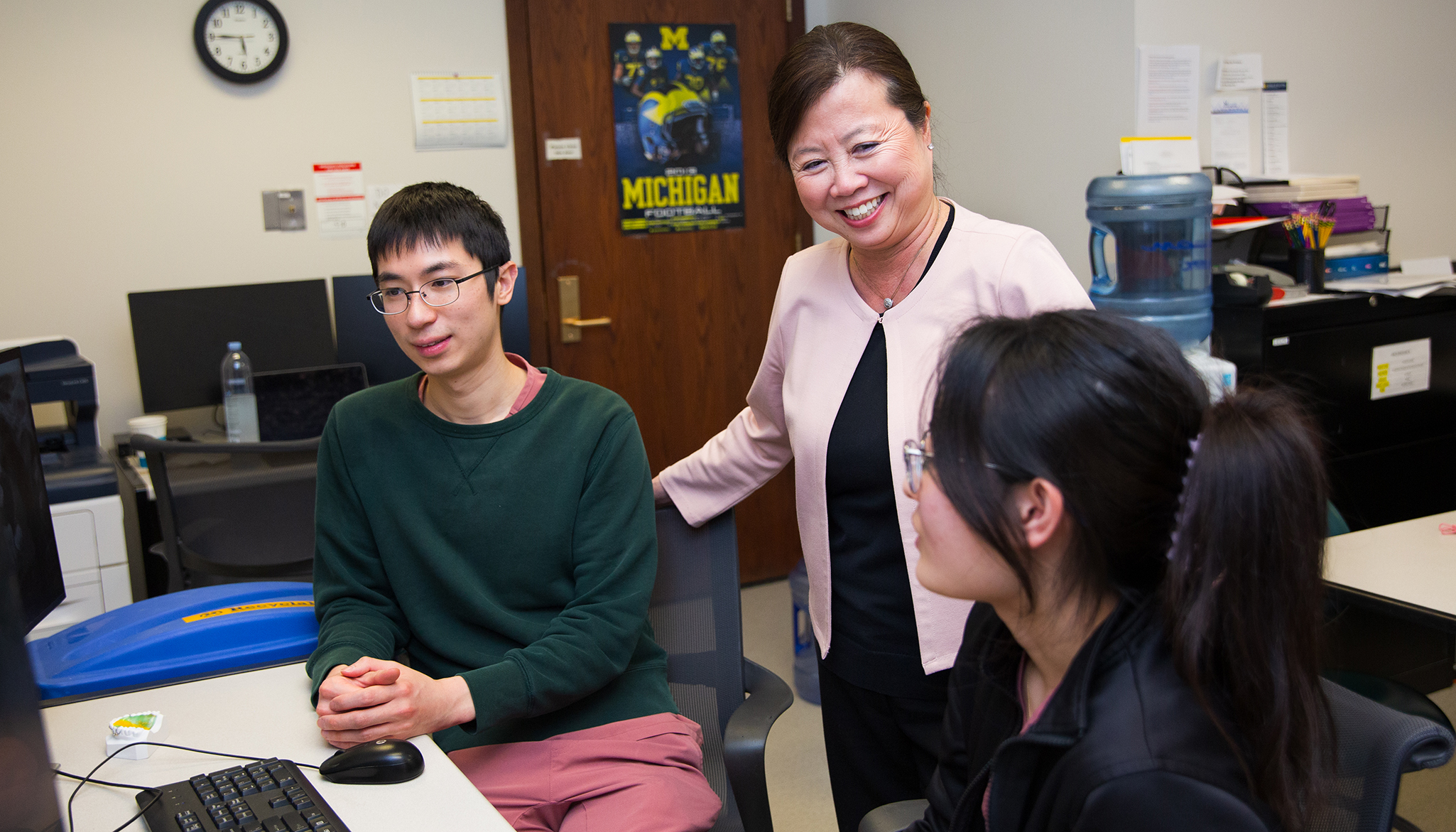
As a clinical professor, Robert W. Browne Professor of Orthodontics and the graduate orthodontic program director at the University of Michigan School of Dentistry in Ann Arbor, Kim-Berman said she’s “empowering the next generation of teachers and the next generation of orthodontists. We have to prepare the succession plan to make sure that the public is taken care of and that students are taken care of — all of that so that we can actually do what we want to do together: help people.”
Family-Like Community
Kim-Berman said she first felt the value of helping other students as a teaching assistant in organic chemistry during her undergraduate studies at Stony Brook University, where she majored in biology. She continued as a teaching assistant when she started at Stony Brook School of Dental Medicine in 1987.
“I got great satisfaction in helping somebody,” said Kim-Berman. “I loved Stony Brook. It gave me a chance to pursue a field and discover myself in a really nurturing environment. For me, it felt like a tight-knit community that was very family-like. Actually knowing everybody in the school is an important part of the learning environment.”
A standout extracurricular experience was working with faculty on one-on-one research projects. “I was selected to represent the school in a student research competition at a dental meeting sponsored by Dentsply Sirona,” she said. “That was the first time we were looking at dental bleaching. My first mentor in research was Mark Wolff, DDS ‘81, PhD ‘97, who is now dean at the Penn School of Dental Medicine. I was awarded second place, which everybody thought was great. That was the point where I had exposure to doing research and sharing it with people who are interested, and actually getting some credit for it. I remember that feeling quite well.”
Kim-Berman said she also knew early on in her dental school training that she was going to follow her father’s advice. “Orthodontics was something that I had an affinity for. A lot of the treatment planning was an esthetic-driven specialty. I thought that I would really enjoy orthodontics.”
She is still in contact with her first orthodontic professor at Stony Brook, Richard Faber, DDS, MS, now clinical professor of orthodontics and dentofacial orthopedics in the Department of Orthodontics and Pediatric Dentistry. Faber remembers first meeting Kim-Berman when she was still a student.
“She always wanted to be an orthodontist, and at that time, we didn’t have an orthodontic program; we had what’s called an orthodontic elective,” he said. “It was for seniors interested in orthodontics, and they had one morning a week where they would treat orthodontic patients in the clinic. But I also think she had the bug for teaching.”
Interest in Teaching
After graduating from Stony Brook, Kim-Berman earned a Master of Medical Science from Harvard University. Her master’s thesis project on ceramic materials was performed at the ceramic processing lab at Massachusetts Institute of Technology. When she was interviewed for the orthodontic program, she told them she wanted her career to include teaching and research. “I don’t think I was always taken seriously, but I actually really meant it.”
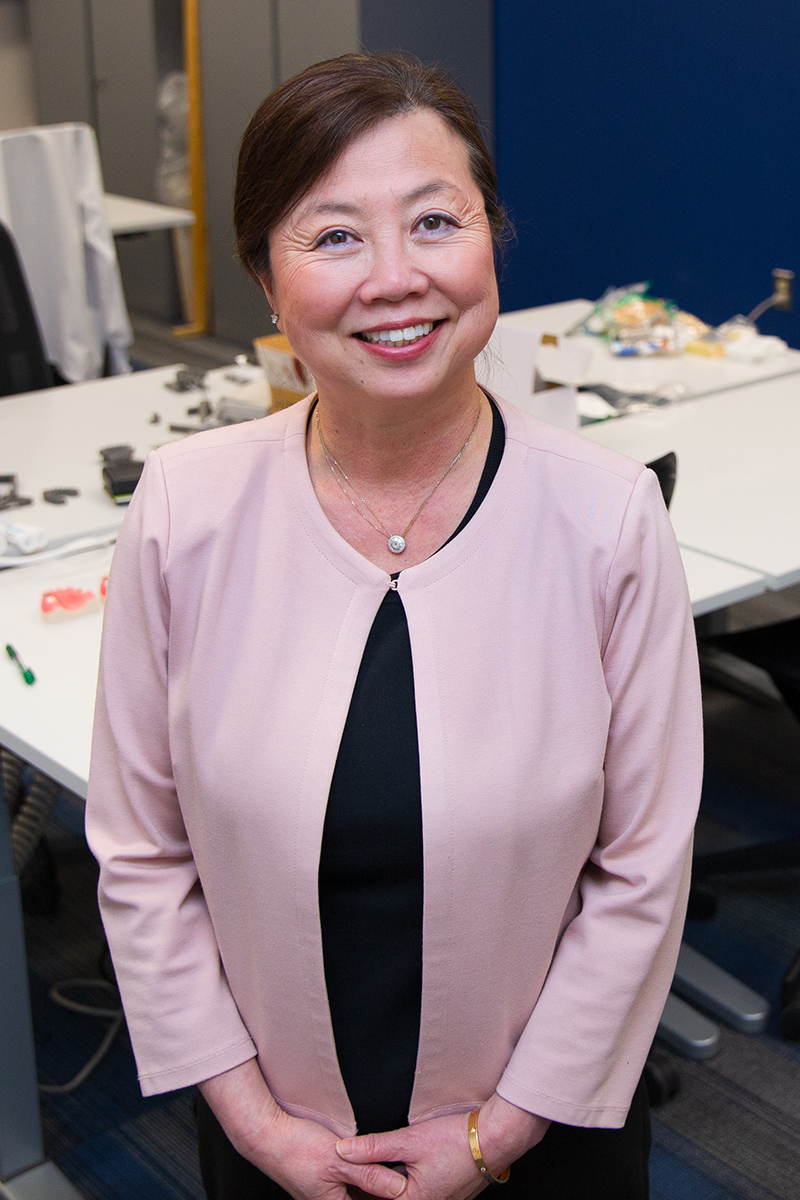 She got support for her goals from the head of orthodontics, Carla Evans, DDS, DMSc, her advisor, whom she still refers to as her “orthodontic mom.” “She was a big mentor to me and still is. Somehow she recognized that I was serious and gave me a chance,” said Kim-Berman.
Evans, now clinical professor of orthodontics at Boston University, said it was a time when there weren’t many women in the field.
“It was a very male-oriented specialty, and to have women in leadership positions, people were pretty skeptical. But Hera has always known where she’s going,” Evans said. “From the time she was in the group of residents at Harvard, it was very clear that she understood the dynamics of being in a group situation; that she identified complex things and knew how to make them simple for other people there. She has a lot of intuition about how things work and how to move the field forward.”
After Harvard, in 1994, Kim-Berman went to West Virginia University School of Dentistry as an assistant professor and then became the graduate orthodontic clinic director.
Detour from Academics
But after four years there, Kim-Berman said she thought she needed some clinical work, and she wanted to move closer to her family in New York. In 1998, she took “a detour from academics” and bought a solo orthodontic practice in Bayside, Queens, where she practiced for 15 years. She didn’t give up teaching though, and from 2004 to 2014, she also taught at Cohen Children’s Medical Center of New York, serving as the director of orthodontics, and at Long Island Jewish Hospital in the pediatric residency program.
“Even after graduating from school, I was still learning,” she said. “I was learning at West Virginia as a young academician. I was learning as a clinician in practice in New York, and I was also learning from pediatric residents and hospitals.”
While in New York, she also got involved with the Hagedorn Cleft Palate and Craniofacial Center at North Shore University Hospital. She said she had been interested in craniofacial anomalies during orthodontic training, so this renewed her interest.
“It’s a very vulnerable and special population with lots of needs from infancy all the way to adulthood. They’re the most complex cases, and they can’t really do it without an orthodontist who is part of the team,” she said.
Value in Dual Roles
In 2014, when Kim-Berman turned 50, she took stock of her career. “I was in a solo practice and I felt like there must be something more,” she said. “I really wanted to pursue my first passion.”
She applied to an assistant professor opening at the University of Michigan and was offered the job. She sold her practice, and she, her husband and son, moved to Michigan.
Today, she teaches orthodontic and pediatric dentistry residents as well as the postdoctoral craniofacial fellow. Now she’s “orthodontic mom to 21 residents.” Her clinical and research interests continue to be in the treatment of cleft lip and palate and craniofacial anomalies, and she treats patients and teaches students as the senior clinician, she said. Her research focuses on integrating emerging technologies to dental education and clinical care.
While she sometimes wonders if she should have taken that detour as a sole practitioner because it took longer to achieve her teaching goals, Kim-Berman said there’s value in her dual career experiences.
“I think having that clinical experience gives me street cred,” she said. “Being out there, running a practice, understanding the environment, and then trying to translate it in the classroom, presenting the realistic point of view, and the differences in how to run a practice—it’s all positive. I know I gained strength from it, but transitioning from academics to private practice was difficult, and transitioning back from private practice to academics is also very challenging.”
She added, “However, currently, I can give a broad perspective, not just technique-wise, but how we really treat the patient holistically.”
Empowering the Next Generation
That’s why, Kim-Berman said it’s necessary for dental schools to retain their faculty. “It’s important for somebody to be valued for their desire to teach for less financial gain than private practice. If you can find these individuals who want to be academicians, you have to really nurture them and mentor them and make them feel successful.”
Kim-Berman acknowledged that there are financial barriers to pursuing academia. She said being able to attend Stony Brook with a state university tuition permitted her to make career choices and “to pursue my passions rather than being in debt with student loans. Removing the financial barrier is an important aspect of faculty development and faculty support.”
The biggest reward of her chosen path is seeing her students succeed. “When I won that research award as a student at Stony Brook, I thought that was fantastic. I can’t even imagine what my faculty felt. As a parent, you probably enjoy your child’s success more than your own. As an academic, when one of my students got a similar award to what I received in dental school, my heart was full for them.”
She added this advice: “For those interested in teaching, the joy of watching students reach their potential and grow in their own unique ways is unmatched and brings genuine purpose. It makes every challenge worthwhile.”